
Introduction
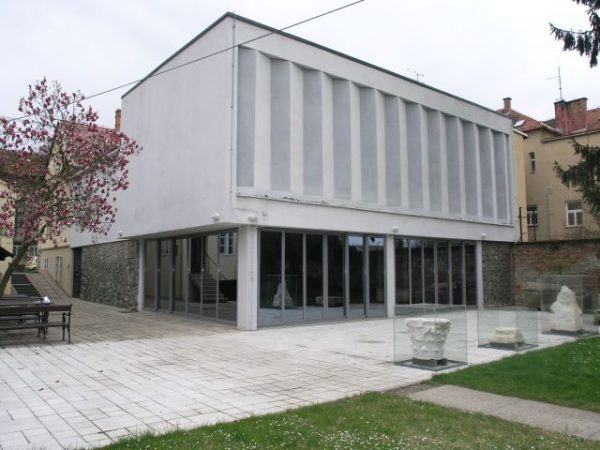
The initiative to establish the museum dates back to 1942 when the Museum and Library Society of Sisak was founded. The museum’s initial phase of operation within the society ended with the official establishment and public opening of the museum under the name City Museum of Sisak.
The museum’s first exhibition was ceremoniously opened on May 1, 1951, which is considered the official founding date of the City Museum of Sisak. In 1957, the Museum and Archive of the National Revolution was established in Sisak to cover the areas of Sisak, Petrinja, Glina, Kostajnica, and Dvor. During this period, both institutions began actively collecting and processing materials.
On the basis of a decision by the Sisak Municipal Assembly dated December 15, 1964, the City Museum and the Museum and Archive of the Revolution were merged into a single museum institution called the Museum of Sisak. This integrated institution began operating on January 1, 1965, conducting museum activities across the municipalities of Sisak, Petrinja, Glina, Kostajnica, and Dvor.
In 1995, the museum adopted a new Statute and Regulations on Internal Organization and Operation, which officially changed its name to the City Museum of Sisak and defined a new scope of its activities.
Today, the City Museum of Sisak is a general-type museum that operates within the city of Sisak. Its collection includes more than 30,000 artifacts. The most extensive collection is archaeological material dating from prehistoric times to the Middle Ages.
From prehistoric times, the collection features numerous characteristic tools and figurines. Highlights from the Bronze Age include a hollow axe (celt) and a sword of the Sprockhoff type. A bronze Illyrian helmet from the 6th century BC belongs to the Early Iron Age. Most findings from the Late Iron Age (La Tène culture) are related to the settlement of Segestica: ceramic vessels, children’s toys, fibulae, battle knives, razors, and sickles.
Artifacts from Roman Siscia (1st century BC) include military objects, particularly a soldier’s helmet. Notable remains of decorated stone architecture are also part of the collection. Numerous findings illustrate life in the city during this period: bricks, a glass furnace, molds for lamps, and molds for making fibulae and pendants. A metal lamp shaped like a lamb from the 4th–5th century stands out for its craftsmanship from the Late Antiquity period.
A limited number of medieval artifacts (6th–16th century) testify to the continuity of settlements and cultures in the area. Around 100 items originate from Avar-Slavic, Germanic, and Early Croatian cultures, including various jewelry, horse equipment parts, weapons, tools, and fragments of ceramic vessels. Significant Early Croatian finds include a fragment of an altar partition (pluteus) decorated with pre-Romanesque interlace ornamentation.
The numismatic collection includes numerous Illyrian and Celtic coins, with the largest number being Roman coins, especially those minted in Siscia. The collection of medals dates from the 17th to the 20th century.
The historical collection reflects the cultural, historical, and economic development of Sisak. It includes guild and social emblems, handicraft products, religious objects, furniture, glass, porcelain, clothing, and personal items. The archival materials document the history of the Old Town and battles with the Ottomans, the development of shipbuilding and crafts, the founding of various societies and institutions, and contain personal documents of prominent citizens of Sisak.
Artifacts from modern and contemporary history cover a wide range of social, political, military, economic, cultural, and everyday life aspects, focusing on pivotal events and individuals who shaped the life of the city.
The art collection consists of paintings, sculptures, and graphics, mostly by Croatian artists, including V. Becić, M. C. Crnčić, B. Čikoš-Sesija, O. Herman, A. Motika, M. Uzelac, and others. It also features works by artists whose lives and work are connected to the Sisak area, such as A. Biočić, J. Bužan, Z. Gradiš, Ž. Janeš, I. Mareković, P. Pirš, M. Steiner, S. Striegl, Z. Šulentić, S. Zadrović, and others.
The ethnographic collection covers the wider area of Sisak and the settlements of Posavina, Pokuplje, and Banovina. Along with documentation on specific folk architecture, the collection includes handcrafted furniture, fishing tools, artisan products (pottery and basketry), weaving looms and tools for textile production, as well as a wealth of elaborately crafted textile items and jewelry.
The museum is also responsible for the Sisak Fortress Old Town from the 16th century, a cultural monument of the highest category, built to defend against the Ottomans. The Old Town Fortress is currently closed due to damage caused by the earthquake on December 29, 2020.
Additionally, the museum owns the premises of the former Barutana Barracks, which will house the future Homeland War Museum Exhibit. The Barutana Barracks was the first facility of the former Yugoslav People’s Army (JNA) to be captured by Croatian troops on September 3, 1991, making it of exceptional importance in modern Croatian history.
Since 2017, the museum has also been entrusted with the management of the Sisak Ironworks Sculpture Park. Furthermore, the City Museum of Sisak is responsible for the regular maintenance of the archaeological site “Siscia in situ” and the archaeological park “St. Quirinus”.
Since December 2019, the City Museum of Sisak has been managing the Industrial Heritage Info Center – Holandska Kuća. Holandska Kuća is the name of an old grain warehouse from the second half of the 19th century, located in the city center and representing one of its symbols. The building now houses an info center with a multimedia exhibition space dedicated to presenting the industrial heritage of Sisak, as well as an exhibition space featuring a collection of vintage phonographs, gramophones, and radio devices from the collection of Velimir Kraker, a collector from Sisak.
Location
Sorry, no records were found. Please adjust your search criteria and try again.
Sorry, unable to load the Maps API.